

What is Environmental Sustainability and Why is It Important?


Understanding the numbers
When reviewing job growth and salary information, it’s important to remember that actual numbers can vary due to many different factors—like years of experience in the role, industry of employment, geographic location, worker skill and economic conditions. Cited projections are based on Bureau of Labor Statistics data, not on SNHU graduate outcomes, and do not guarantee actual salary or job growth.
Every year across the world on April 22, Earth Day is a time to bring people together to focus on a common goal: sustainability. According to the Earth Day site, the annual campaign calls on communities and individuals to stand up and speak out in support of our clean air, clean water, clean energy, protected natural resources and a stable climate. 2026's theme is "Our Power, Our Planet.”
Some organizations put environmental sustainability at the forefront every day — not just Earth Day. For instance, institutions like Southern New Hampshire University (SNHU) have created an Office of Sustainability to help empower their students, staff and faculty to create a sustainable organization and culture.
You, as an individual, can also make a difference by supporting sustainability at home. But how? Learn what sustainability is, why it's important and what you can do to help.
What is a Simple Definition of Sustainability?
The United Nations (UN) defines sustainability simply as “meeting the needs of the present without compromising the ability of future generations to meet their own needs.”
"I like this definition," said Mike Weinstein, PhD, director of sustainability at SNHU, who established the university's internationally accredited Arboretum. With over a decade of teaching experience and a PhD in environmental studies and sustainability, Weinstein is well-versed in examining complex environmental issues. He said that the definition challenges us to consider two questions: what are our needs, and what is life beyond ourselves?
He described “needs” as clean water, healthy food and stable housing, and pointed out that billions of people still lack access to some combination of those needs. For instance, about one in four people worldwide, or 2.1 billion people, lack access to safe water in 2026, according to Water.org, a global nonprofit organization (Water.org PDF source).

The United Nations Educational, Scientific and Cultural Organization (UNESCO), a specialized agency of the UN, reported that the global urban population facing water shortages is expected to increase significantly, potentially doubling from 930 million in 2016 to between 1.7 and 2.4 billion people by 2050.
In light of this growing issue, Pamela Beckvagni, assistant director of sustainability programs at SNHU with over 25 years of experience in program leadership, sustainability and environmental management, expanded on sustainability's definition to include the importance of responsible resource management. "Environmental sustainability refers to the responsible and balanced use of natural resources to meet the present needs without adversely compromising the ability of future generations to meet their own needs," she said.
Why is Environmental Sustainability Important?
Environmental sustainability is important to preserve resources like clean air, water and wildlife for future generations. “The ultimate positive result to environmental stability is ensuring long-term ecological stability and life,” said Beckvagni.

One way scientists measure sustainability is through the planetary boundaries framework, first introduced in 2009 (NASA PDF source). The model defines the limits of how human activity affects nine of the Earth’s core systems that keep the planet stable, including climate change, freshwater change, ocean acidification and ozone depletion. Weinstein describes it as “ensuring that human society operates within ecological borders.”
According to Weinstein, much of the world is disconnected from the planet’s basic functioning, making it easy to overlook these limits. Humans live alongside the rest of Earth’s living systems, yet current economic activity often ignores ecological boundaries, he said.
A 2023 update to the planetary boundaries framework, shared on Science.org, adds urgency to Weinstein's concerns. According to the updated research, “There is accumulating evidence that the current level of boundary transgression has already taken Earth system beyond a ‘safe’ zone.” In other words, scientists believe human activity is pushing Earth's critical systems past thresholds that support stable human life.
Those thresholds don’t just affect future generations. For example, according to the Office of Disease Prevention and Health Promotion (OASH), environmental pollutants in air, water, soil, food and materials in homes and workplaces can contribute to respiratory diseases, heart disease and some types of cancer. The agency reports that more than 12 million people worldwide die each year because they live or work in unhealthy environments.
“We have to simultaneously recognize that oppressed communities are more severely impacted by environmental degradation,” Weinstein said. You can’t truly achieve sustainability, he said, until everyone has safe, healthy and happy communities that operate with future generations in mind.
Find Your Program
What Are 5 Ways to Be Sustainable?
Conservation International, a global nonprofit environmental organization, offers a multitude of sustainable living tips, including:
- Buy less overall, borrow or choose second-hand items such as furniture, clothing, refurbished electronics or even textbooks.
- Go meat-free one day a week, limit meat consumption overall, buy locally grown fruits and vegetables, or plan shopping to reduce food waste.
- Limit single-use plastics with reusable water bottles or grocery bags, or choose products with glass or paper packaging.
- Reduce energy consumption by turning off the water while brushing your teeth, using cold water in the washer or opting for natural light instead of overhead lighting.
- Ride your bike, walk or take public transportation when possible, or combine weekly errands to reduce the number of trips you take.
Other options include installing solar panels or using an electric car, though Weinstein said these can be more costly, often more so than non-sustainable solutions.
On a broader scale, you can also focus on pressuring large systems to change. Weinstein said that SNHU has an Office of Sustainability because the university’s Board of Trustees and senior leadership understand that it is the right thing to do — and, because SNHU’s staff, faculty and students expressed interest in a university-wide commitment.

How Do You Ensure Environmental Sustainability?
Environmental regulations come from organizations like the United States Environmental Protection Agency (EPA). The EPA has congressional authority to write rules that lead to the implementation of laws.
According to the EPA, these regulations are mandatory and can apply to:
- Businesses
- Individuals
- Nonprofit institutions
- State or local governments
 These regulations create accountability, but they need to be both strict and strictly enforced, Weinstein said, if they are to succeed in creating environmental sustainability. The challenge is, he said, that the EPA is backlogged, and our current public infrastructures are failing to create accountability.
It may feel frustrating, but there are ways everyone can commit to making a difference without legal obligation. For example, the UN offers 17 goals for sustainable development that act as the path to achieving a more sustainable future.
These goals address global challenges like:
- Clean water and sanitation: Such as learning to avoid wasting water
- Climate action: Acting now to stop global warming
- Life below water and on land: Avoiding the use of plastic bags to keep the oceans clean, and planting trees to help protect the environment
- Responsible consumption and production: Recycling items such as paper, plastic, glass and aluminum
- Sustainable cities and communities: Biking, walking or using public transportation
According to the UN, more than 150 countries have already engaged in activities to meet those goals. Individuals, schools, businesses and organizations can also act now by joining an online community of participants in the AWorld app, which allows users to track their impact, take action, earn rewards and challenge friends.
Examples of Sustainability at SNHU
Across college campuses, there is a growing demand for sustainable efforts. According to a Student Voice survey conducted by Inside Higher Ed, 81% of students report being at least somewhat worried about climate change, 45% said environmental sustainability factored into their college enrollment decision and 85% believe it is at least somewhat important for their campus to prioritize sustainability.
SNHU can bring principles of sustainability to its community because it is uniquely positioned by its global reach with students and faculty located on campus and around the world, said Weinstein.
SNHU focuses on five primary goals when it comes to sustainability:
- Academics: Creating a positive environment with opportunities for all learners to become engaged with sustainability.
- Carbon neutrality: Upholding the university's commitment to the Second Nature President’s Carbon Commitment and its carbon neutrality goal (Second Nature PDF source).
- Community engagement: Fostering a culture of sustainability at all levels and being recognized within local communities.
- Operations: Working behind the scenes to reduce the university's economic footprint and ensure day-to-day operations are supporting sustainability.
- Planning and administration: Organizing and maintaining goals while being transparent on progress. SNHU's Office of Sustainability is instrumental in conducting planning and administration.
There are many ways you can continue to expand your sustainability knowledge and efforts, including pursuing a degree in environmental science.
Read more about sustainability at SNHU.
What Can You Do With an Environmental Science Degree?
Pursuing a degree in environmental science can give you a foundation in both natural and physical sciences, and can prepare you for a career looking after and caring for the planet. You may engage in frontline work, such as identifying and addressing areas of environmental degradation, like pollution and biodiversity loss, Weinstein said.

Samantha Sherwood '24 was on a trip in Hawaii when she had a conversation with a sustainability expert and a marine biologist that sparked her interest in the field. She soon made the decision to enroll in SNHU's bachelor's in environmental science program.
"The reason I chose that degree was because it allowed me a level of flexibility," Sherwood said. "I didn't know exactly what direction I wanted to go ... and it allowed me both the breadth and the depth to kind of apply it in whatever way really piqued my interest after I graduated."
She had an opportunity put her education to work when starting a new role recently in the environmental science field.
If you're interested in this field, there are other educational pathways you can consider, too, such as a geoscience degree. Geoscience focuses more on the physical sciences such as geology, geography, physics, chemistry and more.
If you already have a bachelor's, you could consider an MBA program with a concentration in sustainability and environmental compliance. This will give you the opportunity to learn about green business practices and applying solutions to sustainability challenges. An MBA like that can be beneficial in an array of workplaces including various organizations, nonprofits and private companies.
Learn more about what you can do with an environmental science degree.
3 Careers in Sustainability
A few career paths in sustainability that you could pursue include:
- Engineer: There are many types of engineering — some of which are focused on the environment. Environmental engineers combine engineering, biology and chemistry to develop environmental solutions, according to the U.S. Bureau of Labor Statistics (BLS), and most will need a bachelor’s for this position. BLS reports environmental engineers earned a median pay of $104,170 in 2024, and those jobs are projected to grow by 4% through 2034.*
- Environmental scientist: Typically requiring a bachelor’s degree, environmental scientists use their knowledge to protect the environment and human health, according to BLS. Environmental scientists and specialists earned a median pay of $80,060 in 2024, and BLS reports those jobs are projected to grow by 4% through 2034.*
- Geoscientist: Using their knowledge of physical science to learn about earth, most geoscientists need a bachelor’s degree, according to BLS. Although, for some positions employers may prefer a master’s. BLS reports that geoscientists earned a median pay of $99,240 in 2024, and those jobs are projected to grow by 3% through 2034.*
The sustainability field casts a wide net and requires knowledge from many different sectors, said Weinstein. This leads to a variety of ways that you can contribute to the field.
Regardless of your education level or career, there are many ways that you can make a difference in environmental sustainability, starting today.
Discover more about SNHU’s environmental science degree: Find out what courses you’ll take, skills you’ll learn and how to request information about the program.
*Cited job growth projections may not reflect local and/or short-term economic or job conditions and do not guarantee actual job growth. Actual salaries and/or earning potential may be the result of a combination of factors including, but not limited to: years of experience, industry of employment, geographic location, and worker skill.
Nicholas Patterson ’22 ’25MFA is a writer based in West Michigan with several years of experience as a content creator in higher education. He’s an alumnus of Southern New Hampshire University (SNHU), where he earned both his bachelor’s in English and creative writing and his Master of Fine Arts in Creative Writing. When his head’s not in novels, you can find him outside dreaming up his own stories. Connect with him on LinkedIn.
Explore more content like this article

How Tim Pressed Start on a Career in Game Development

How to Become a Game Developer

What Do Programmers Do, Anyway?
About Southern New Hampshire University
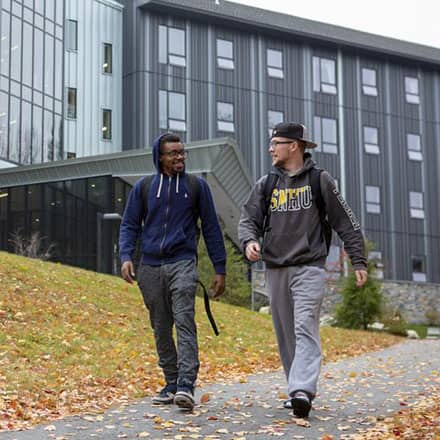
SNHU is a nonprofit, accredited university with a mission to make high-quality education more accessible and affordable for everyone.
Founded in 1932, and online since 1995, we’ve helped countless students reach their goals with flexible, career-focused programs. Our 300-acre campus in Manchester, NH is home to over 3,000 students, and we serve over 135,000 students online. Visit our about SNHU page to learn more about our mission, accreditations, leadership team, national recognitions and awards.